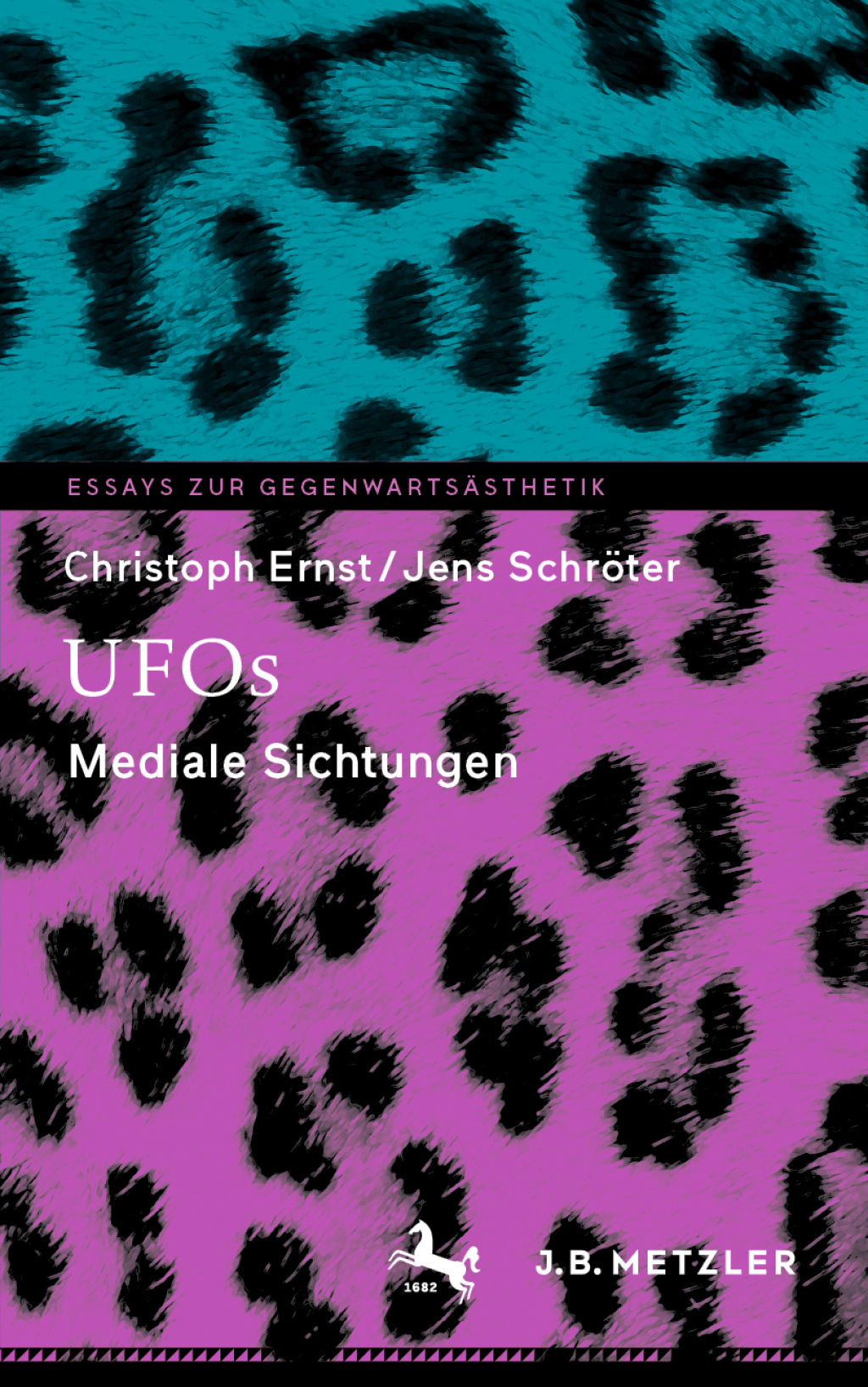
OUT NOW!
Christoph Ernst and Jens Schröter on the strangest media phenomenon .... UFOs!
UFOs are a central and virulent topic of contemporary aesthetics: as objects mediated by the media, they are also touchstones for the mechanisms of mediated reality itself. This applies both to the possibility of conducting a discourse about UFOs at all, i.e. recording and documenting these ‘unknown flying objects’, and to the dissemination of narratives about UFOs in science fiction. Against this background, UFOs are understood as media-aesthetic objects that are used to negotiate what is ‘real’ and how the media contribute to the construction of reality.


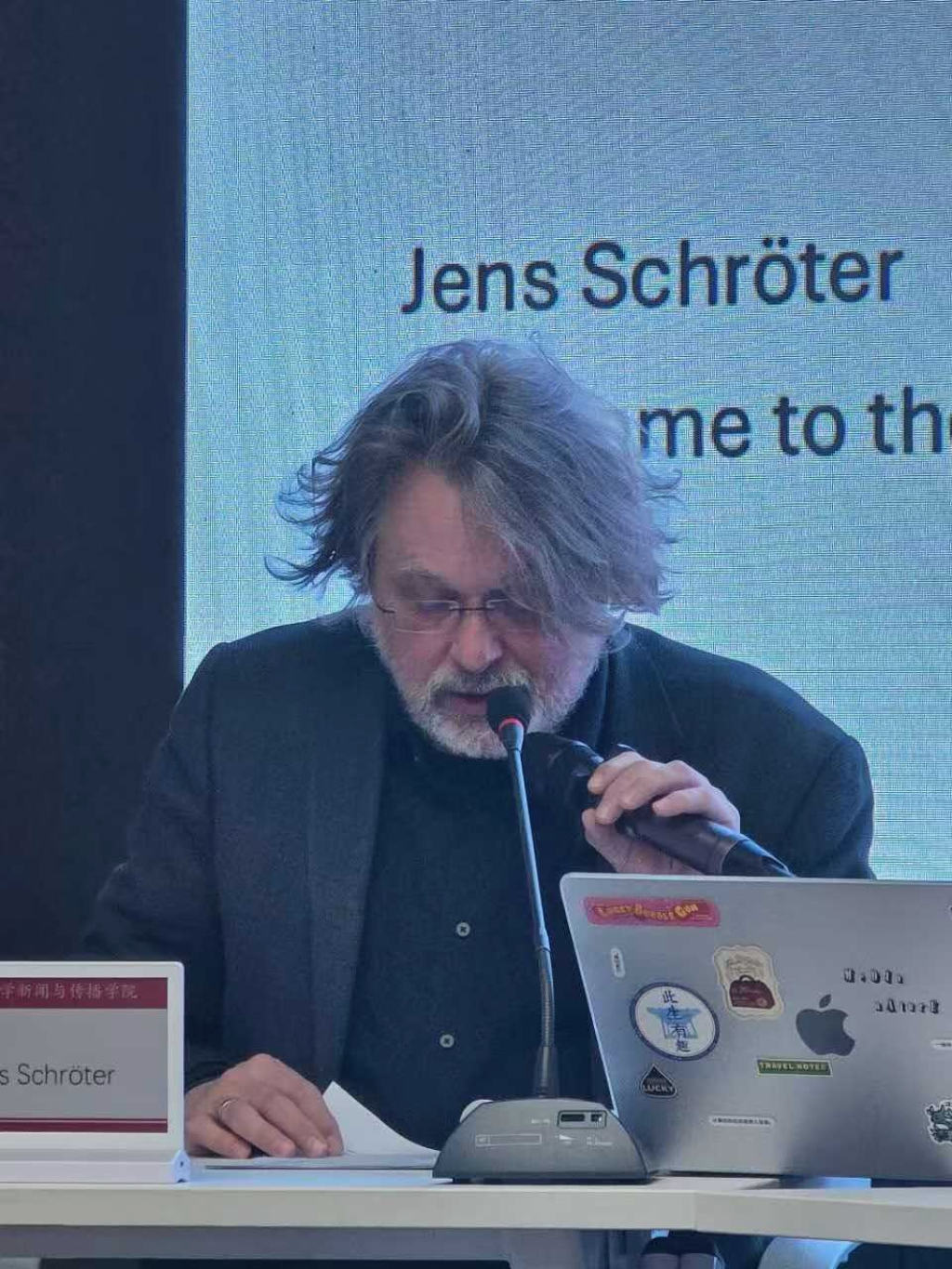
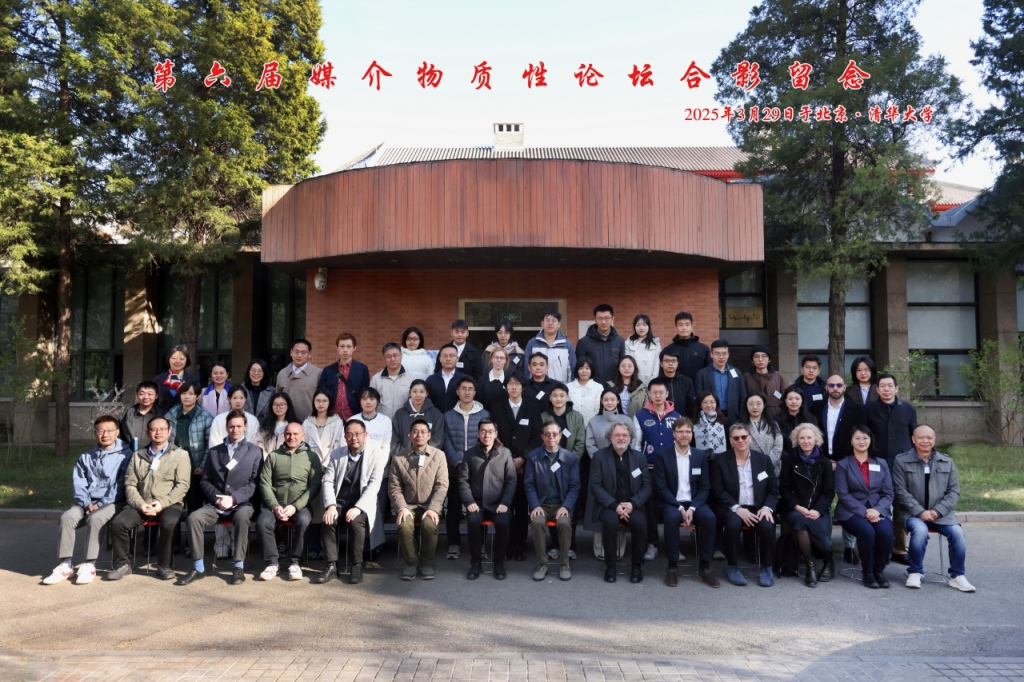
Keynote of Prof. Dr. Jens Schröter, 29.3. at Tsinghua University, Beijing!
WELCOME TO THE QUANTUM REVOLUTION!
Jens Schröter gave on 29.3. a keynote at Tsinghua University, it was called »Welcome to the Quantum Revolution«!

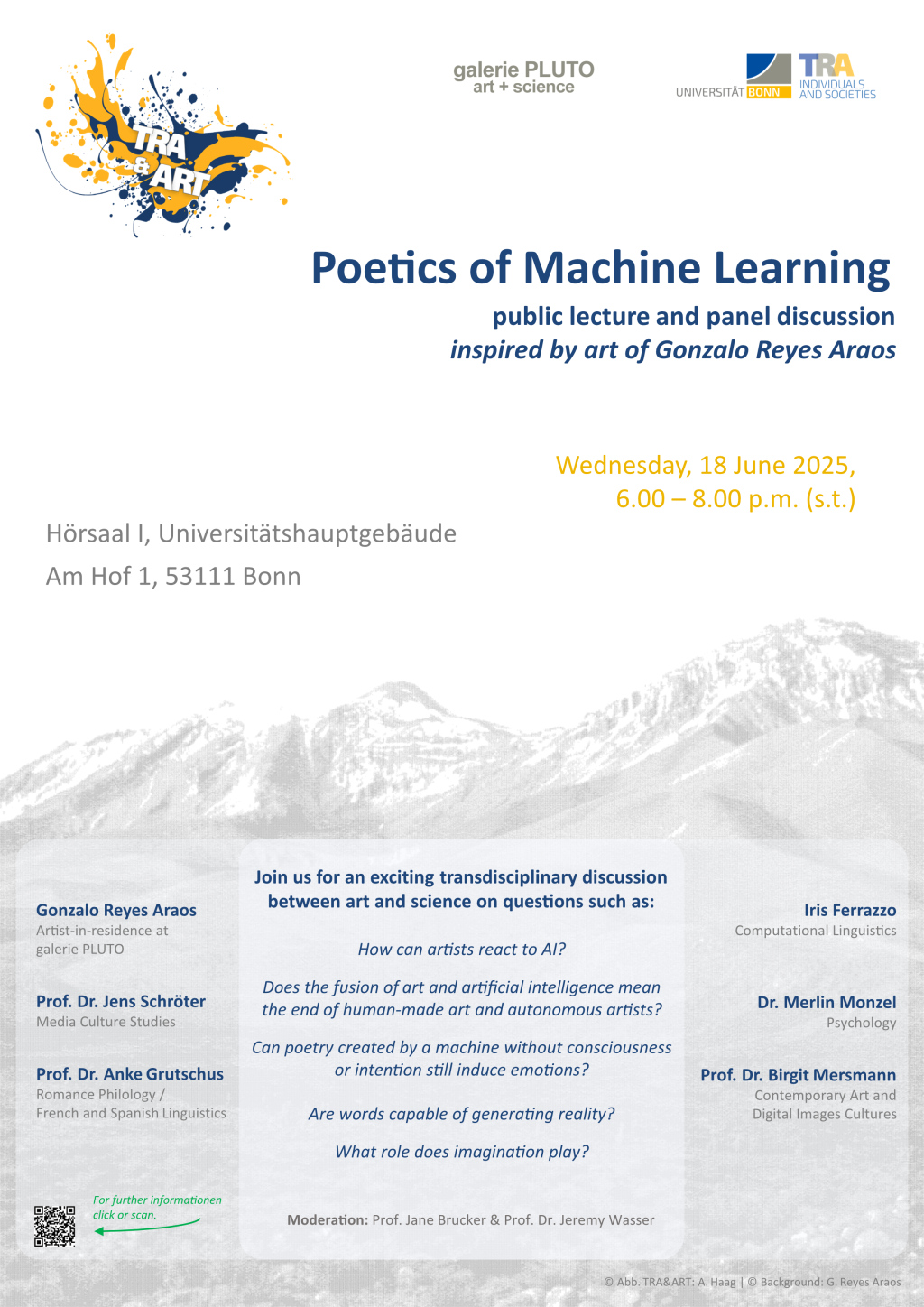
UPCOMING TALKS BY JENS SCHRÖTER!
»Promptografie. Foto-künstlerische Strategien mit KI« AND »We have never been analog«
»Promptografie. Foto-künstlerische Strategien mit KI« will be given on 17.6.25 at Universität zu Köln
»We have never been analog« will be given at Universität Bonn, 18.6.25 in the context of »Poetics of Machine Learning«
Image: Roope Rainisto, #5 from Life in West America, Cocktail, AI-generated Image, Dreambooth, 2023
AI AND THE SOCIETY OF THE FUTURE
Final Symposion with a presentation of our research project.
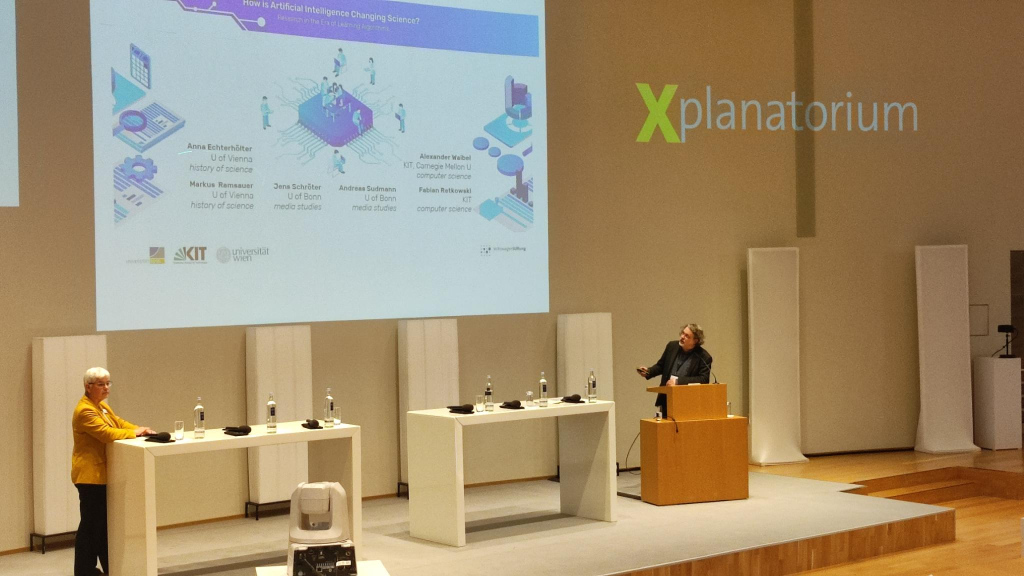
The Volkswagen Foundation`s former funding initiative ›Artificial Intelligence and the Society of the Future‹ focused on integrative research approaches of the social and engineering sciences. On the one hand, the goal was to develop responsible solutions in the field of Artificial Intelligence for the benefit of society. On the other hand, fundamental questions, ethical considerations and societal settings for the usage of Artificial Intelligence was investigated. At the final symposium, the projects will provide new insights into how to shape the future of society and technology in the fields of human-machine interaction, accountability and fairness, communication and opinion-formation as well as education and science. Further, the experiences of the project teams form the basis for discussing which research questions are still open and which framework conditions are necessary for further research into the societal aspects of artificial intelligence.
Prof. Dr. Jens Schröter gave a talk: »How is Artificial Intelligence Changing Science?«
Here is the link to our project.
OUT NOW!
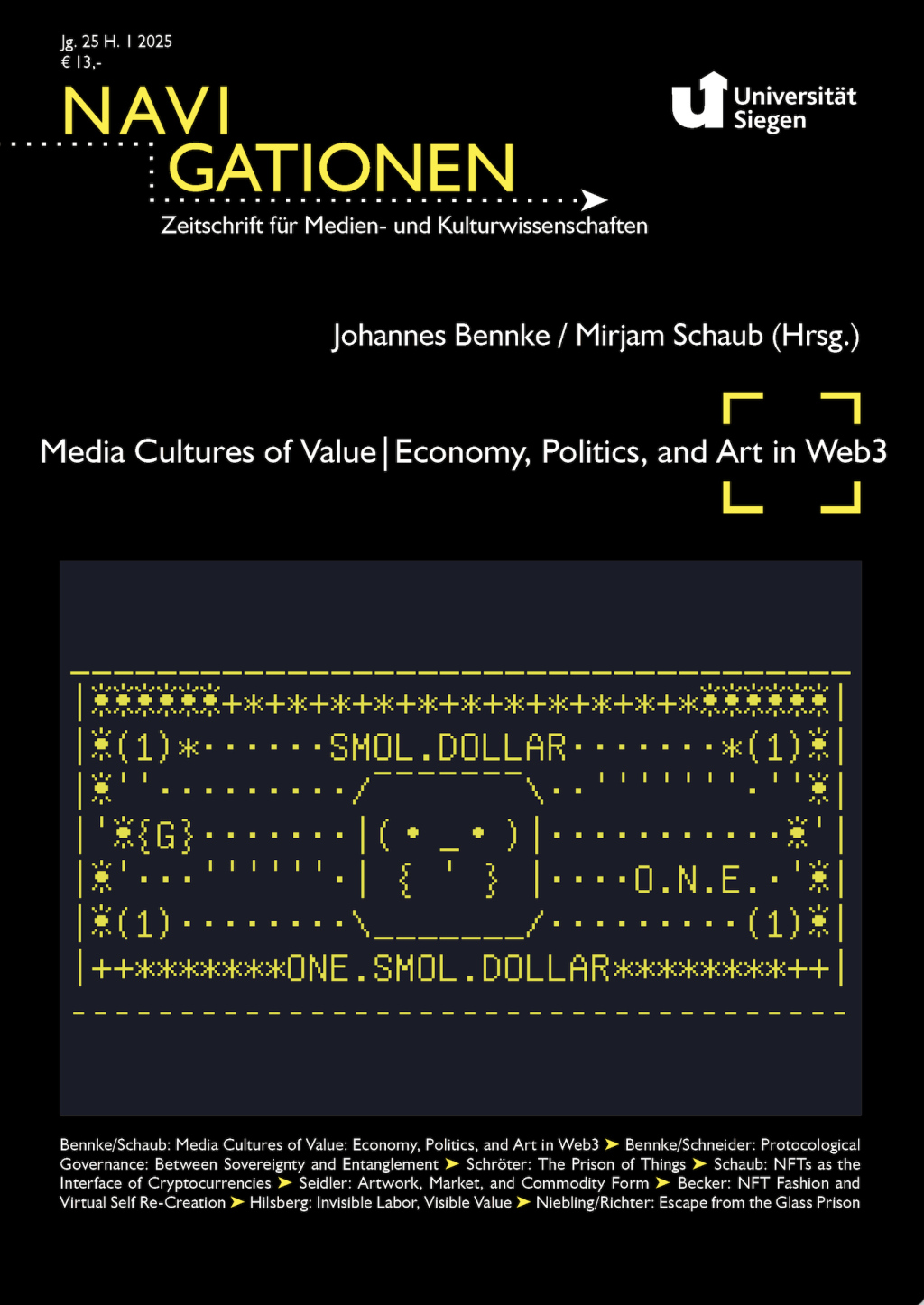
THE NEWEST ISSUE OF NAVIGATIONEN! On the media culture of value!
The journal NAVIGATIONEN is published by Prof. Dr. Jens Schröter (together with Prof. Dr. Benjamin Beil, Cologne).
The current issue, edited by Johannes Bennke and Mirjam Schaub has the topic »Media Cultures of Value«
Values don’t just fall from the sky. They are shaped by media, infrastructure, and social practices. With new protocols and media objects—such as smart contracts, cryptocurrencies, and NFTs—Web3 not only extends platform capitalism but also redefines value, labor, and community. While these technologies reinforce proprietary markets and corporate governance structures, they simultaneously open up alternative new ways of organizing life, challenging traditional economic and social models. This issue builds on the hybrid workshop “Digital Biedermeier—or Radical Democratic Utopia? NFTs as Interfaces of Cryptocurrencies”, organized by Johannes Bennke at the Humboldt University Berlin and Mirjam Schaub at University of Applied Sciences (HAW) Hamburg in October 2023. The issue brings together eight contributions by media scholars, artists, and curators who examine different media cultures of value—exploring protocols, infrastructures, labor, NFTs, art, and political stakes of Web3 governance.
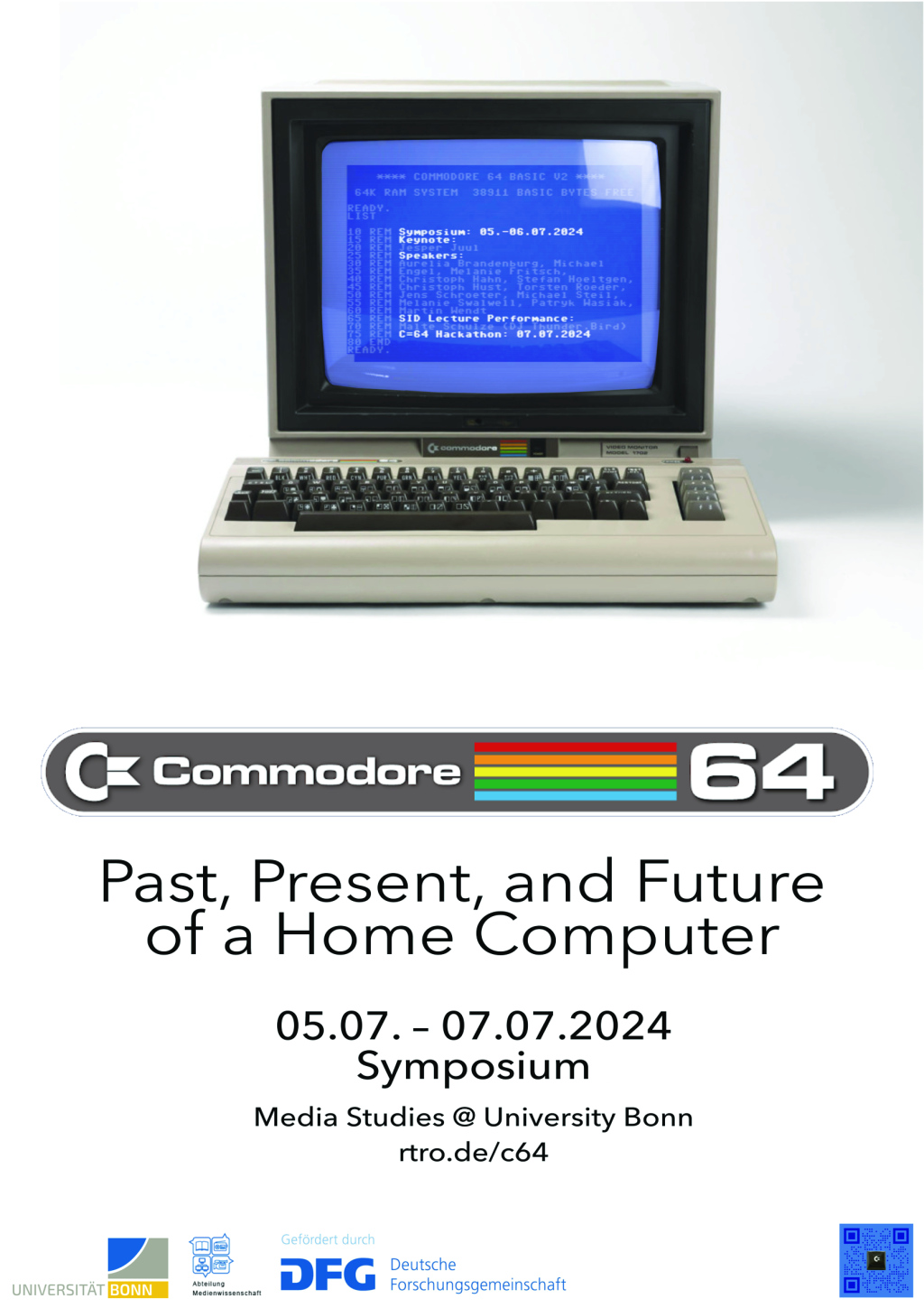

SYMPOSION ON THE LEGENDARY C64-HOMECOMPUTER!
IN JULY 2024 IN BONN!
NEW: An interview with Jens Schröter and Stefan Höltgen on the C64 (nearly three hours)!
Here is the link to the Facebook-page of the symposion!
Here is the official announcement in English!
No other computing platform has become such a well-known cultural icon as the Commodore 64 (also known as the C64, Cevi or affectionately known as the »breadbin«). The figures vary between 11 and 30 million units produced, which were sold between the appearance of the 8-bit computer in September 1982 and its (premature) end of production in April 1994. Already during this time, a rich culture developed around the system in numerous countries – first in the West, but after the end of the Cold War also rapidly in the East. Countless peripherals and hardware extensions, software, especially games, books, magazines, clubs, scene meetings and much more were developed for the C64 during this time. All of this forms a cultural history of computing that is unsurpassed in diversity and of which the Commodore 64 became a symbol.
The symposium "Commodore 64 – Past, Present, and Future of a Home Computer" aimed to discuss some of these even less illuminated or almost forgotten historical discourses and objects. The fact that the C64 still plays an important role in the present, not only in retrocomputing communities, but also in research and teaching in various disciplines, was also discussed and demonstrated with examples. However, the fact that a computer, more than forty years after its release and twenty years after its production stop, still has such a lasting effect on culture, education and science also suggests that the C64 will continue to play a role in the future. The symposium also aims to draw attention to this in lectures and discussions and to outline perspectives.
The international plenary session of the symposium brought together collectors, museum curators, retrocomputing enthusiasts, computer scientists, historians, media scientists, artists, hackers and nostalgics who will discuss their work on and with the C64. After two days of lectures, game evenings and a SID chiptunes lecture performance (where dancing is allowed), the organizers offered a C64 hackathon on the third day, where various coding contests, experiments and applied hacks can be implemented on the original systems in BASIC and Assembler.
The symposium took place at the Department of Media Studies at the University of Bonn from July 5 to 7, 2024. All presentations were held in English and will be streamed over the Internet. It is open to the public and admission is free. For more information, see http://rtro.de/c64.
A publication is in preparation.
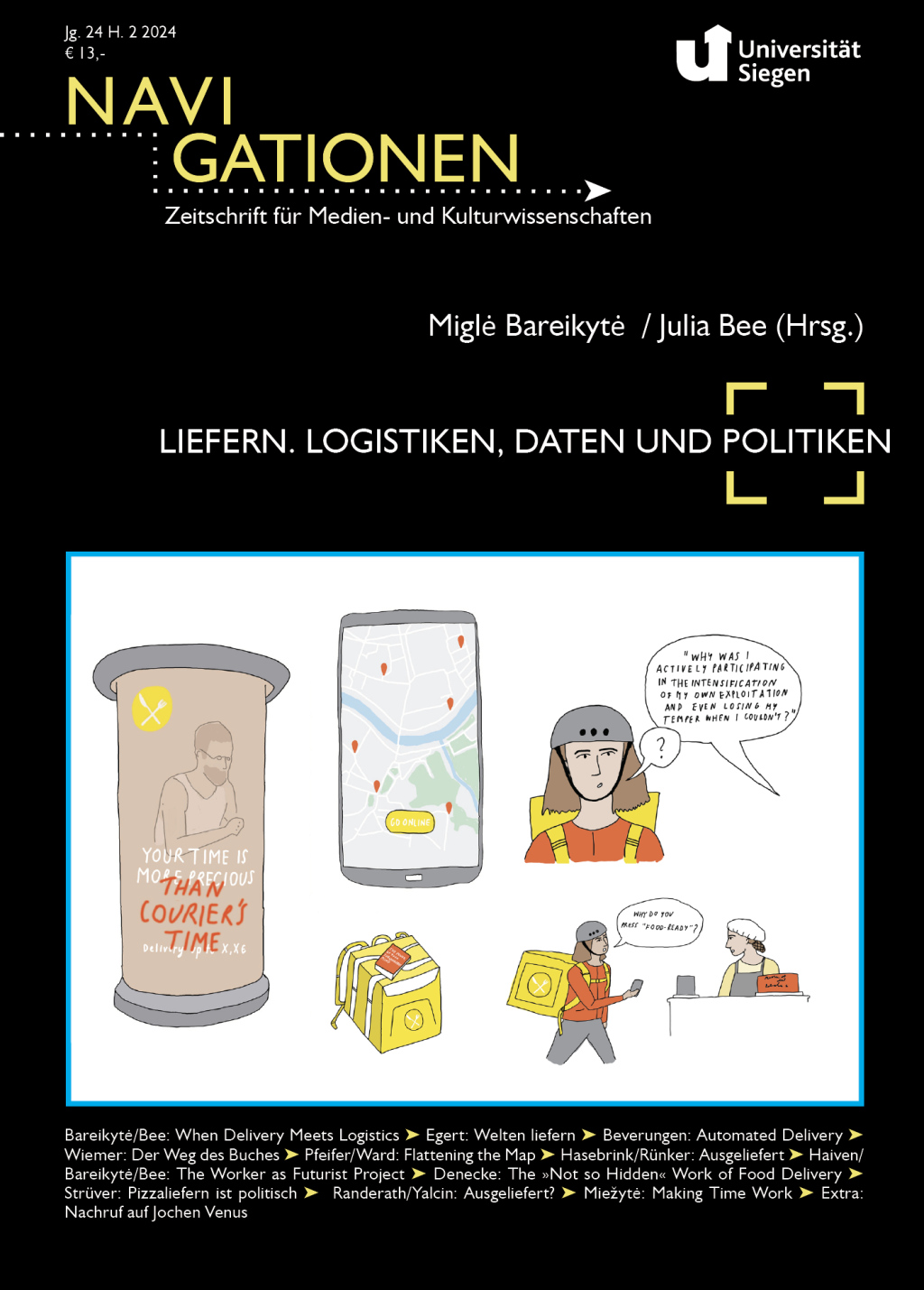
OUT NOW!
The new issue of NAVIGATIONEN ... on »Delivery«
The journal NAVIGATIONEN is published by Prof. Dr. Jens Schröter (together with Prof. Dr. Benjamin Beil, Cologne).
The current issue, edited by Miglė Bareikytė and Julia Bee has the topic »Delivery« and collects numerous contributions that discuss different aspects of this contemporary facet of capitalism and the new logistics, aesthetics and forms of work connected with it.


